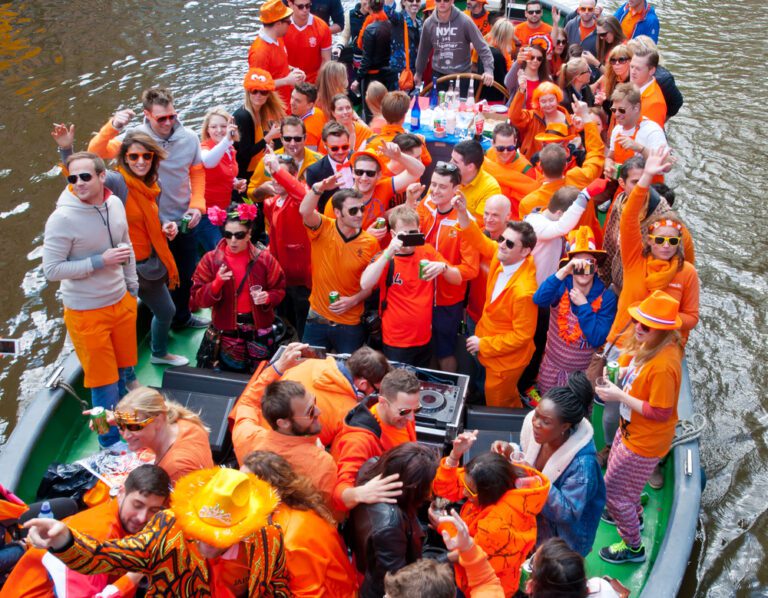
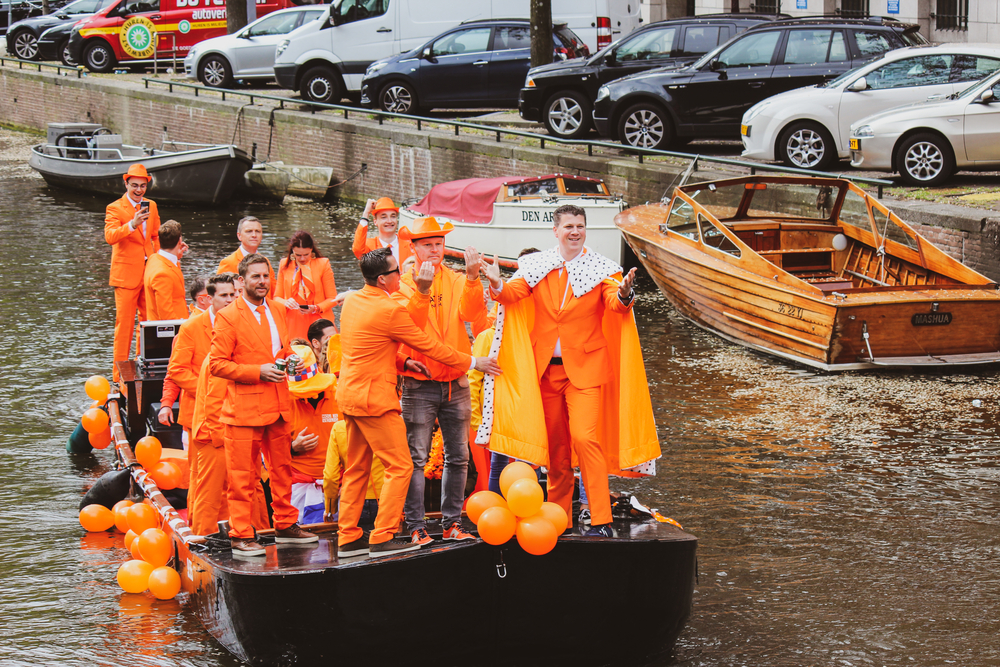
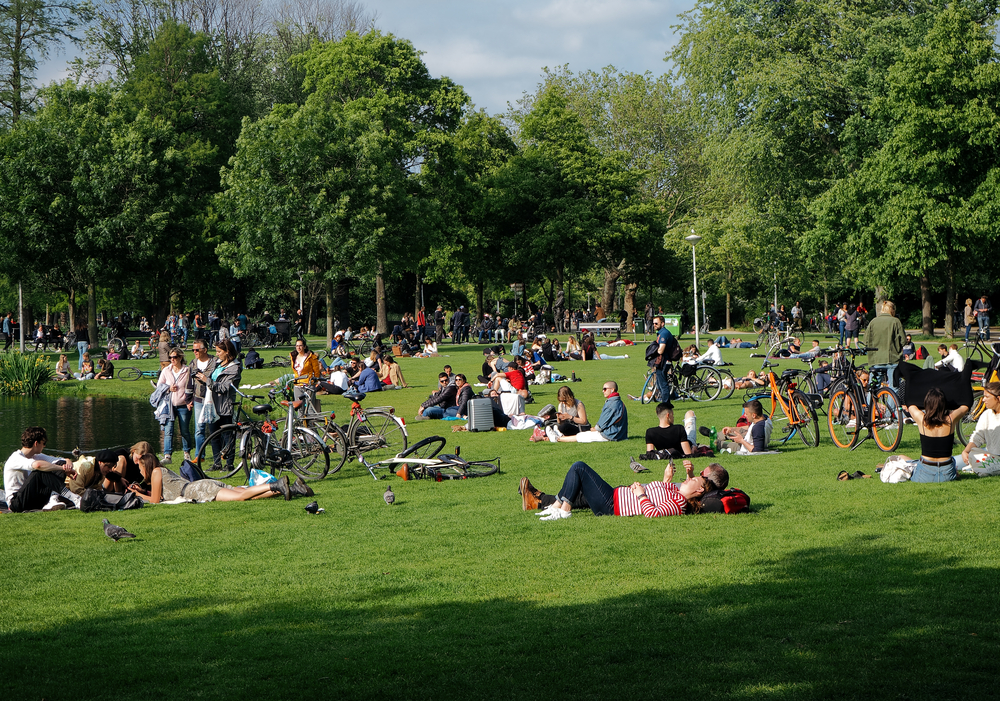
POV: you wake up on the morning of King’s Day. You think you see an army of Oompa Loompas marching down the city streets. After squinting your eyes hard enough, you realise it’s actually a bunch of Dutch people wearing orange! 🇳🇱
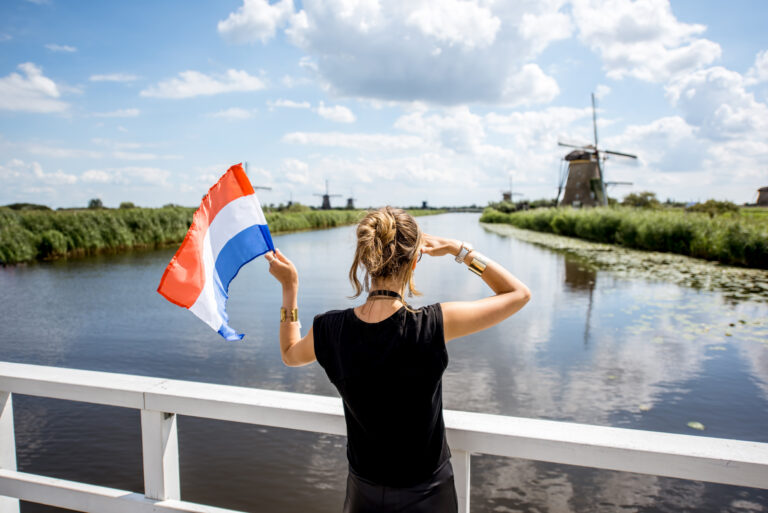
You’d think the Dutch would be wearing the colours of their flag: red, white, and blue. But you’ll notice that the Dutch actually have quite a taste for the colour orange.
Oranje for the win! 🧡
What is it?
If you’ve ever been in the Netherlands during a national celebration like King’s Day or a big event like the Euros or World Cup, you couldn’t have possibly missed the tremendous amount of orange T-shirts, baseball caps, and fedoras everywhere.
William of Orange was the commander of the Dutch rebellion against Spain in the 16th century. In 1544, he was given the name “Prince of Orange” after he inherited the commune of Orange in the south of France.
And, as a result, orange has become a firm favourite when it comes to celebrating the Dutch!
During King’s Day, you’ll hear crowds of patriotic Dutchies singing “Oranje boven, oranje boven, leve de koning!” (Orange above all, orange above all, long live the king!).
During Dutch football matches or Formula 1 races, hundreds of Dutch fans are likely to show up in all-orange attire.
Why is it quirky?
The colour orange initially seems far off from what you’d expect the Dutch to wear during national holidays. After all, the colour isn’t even present on the Dutch flag.
They also go all out with their orange attire during national holidays or sports events.
Celebrating the Dutch king means everyone dresses in orange. Image: Depositphotos
Unlike other countries where you might see the occasional flash of a patriotic colour during festive celebrations, you can be guaranteed to see a sea of orange on King’s Day.
That’s not to say the Dutch wear orange clothes year-round, but “orange” you glad about that? 😉
Should you join in?
Absolutely! Even if you’re not from the Netherlands, it’s still a nice way to participate in times of national pride like a true orange-wearing Dutchie!
If you’re ever planning on attending a Dutch national event, make sure to find your best orange-tinted clothing. 🩳
What do you think of this Dutch quirk? Have you experienced it? Tell us in the comments below!
Before starting your new Dutch life, you’ll likely need to arrange a visa or residence permit to live in the Netherlands.
With its entrancing fields of tulips, delicious stroopwafels, and healthy work-life balance, the Netherlands is definitely one of the best countries to visit or live in.
However, moving into a new country isn’t as simple as following your heart. Like opening a bank account or filing your taxes, there are some legal requirements that you’ll need to tackle before the IND (Department of Immigration) hands your visa or residence permit to you.
We’ve been there, so here’s our full guide to walk you through the process. Veel succes (best of luck)!
Permit paperwork getting the better of you? TAMM Solutions helps expats navigate Dutch immigration pathways, government correspondence, and residence formalities — all in plain English. Skip the bureaucratic guesswork and let their team handle the fine print. Explore TAMM’s services for individuals.
The first question is always: Are you an EU/EEA or Swiss citizen?
If you’re lucky enough to have a passport from an EU/EEA country or Switzerland, then the process is as easy as pie.
Lucky EU resident can blast through immigration with a wave of their powerful, maroon passports. Image: DepositPhotos.com
This is because EU/EEA/Swiss residents do not need a visa to travel or live in the Netherlands.
What are EU or EEA countries?
EU countries include Austria, Belgium, Bulgaria, Croatia, the Republic of Cyprus, the Czech Republic, Denmark, Estonia, Finland, France, Germany, Greece, Hungary, Ireland, Italy, Latvia, Lithuania, Luxembourg, Malta, Poland, Portugal, Romania, Slovakia, Slovenia, Spain and Sweden.
EEA countries include the EU member states, plus Iceland, Liechtenstein, and Norway.
Wait… but what if you aren’t in that club? Unfortunately, almost everyone else is required to apply (or be exempt) for a Dutch visa or residence permit.
Not sure if you need a visa to visit or live in the Netherlands? If in doubt, use the government’s visa requirement check.
Types of Dutch visas and residence permits
Like flavours of stroopwafel, visas to the Netherlands come in many different forms. They typically depend on your reason for travelling and country of origin, and have varying legal and financial requirements.
Keen as a bean to start your journey, but don’t quite know where to start? Let’s run through the most common types of visas and residence permits!
Visas for tourism in the Netherlands
If you’ve always dreamed of vacationing amongst the tulips and windmills, you will likely need to apply for a tourist visa.
The Netherlands doesn’t offer its own tourism visas, as it’s a part of the Schengen Area. The Schengen Area is a group of European countries that have no physical borders.
A visa to the Schengen area will give you access to most European countries. Image: Magnific
Once you have permission to visit the Schengen Area, you can visit the Netherlands too!
Countries in the Schengen Area
Schengen Area countries include Austria, Belgium, Croatia, Czech Republic, Denmark (except the Faroe Islands and Greenland), Estonia, Finland, France (except French Guyana, Guadeloupe, Martinique, and Réunion), Germany, Greece, Hungary, Iceland, Italy, Latvia, Liechtenstein, Lithuania, Luxembourg, Malta, the Netherlands, Norway (except Spitsbergen), Poland, Portugal (including the Azores and Madeira), Slovenia, Slovakia, Spain (including the Balearic and Canary Islands), Sweden, and Switzerland.
In addition to this, citizens from some countries (like Australia, Canada, Ireland, the UK, the US, and more) are visa-exempt for the Schengen area, which means that their citizens do not require a tourist visa to travel to the Netherlands.
Citizens who do not need a tourist visa to visit the Netherlands
Albania, Andorra, Antigua and Barbuda, Argentina, Australia, Bahamas, Barbados, Bosnia and Herzegovina, Brazil, Brunei, Canada, Chile, Colombia, Costa Rica, Dominica, El Salvador, North Macedonia, Georgia, Grenada, Guatemala, Holy See (Vatican City State), Honduras, Hungary, Iceland, Ireland, Israel, Italy, Japan, Kiribati, Latvia, Liechtenstein, Lithuania Luxembourg, North Macedonia, Malaysia, Malta, Marshall Islands, Mauritius, Mexico, Micronesia, Moldova, Monaco, Monaco, Montenegro, New Zealand, Nicaragua, Norway, Palau, Panama, Paraguay, Peru, Poland, Portugal, Romania, Saint Kitts and Nevis, Saint Lucia, Saint Vincent and the Grenadines, Samoa, San Marino, Serbia, Seychelles, Singapore, Slovakia, Slovenia, Solomon Islands, South Korea, Spain, Sweden, Switzerland, Tonga, Trinidad and Tobago, Tuvalu, Ukraine, United Arab Emirates, United Kingdom, United States, Uruguay, Vanuatu, and Venezuela.
However, visa-exempt travellers will in future also need an ETIAS travel authorisation before they arrive. It isn’t in force yet.
The launch has been delayed several times and is now expected in 2027, so no one needs to apply for one at the moment. It’s worth checking the official EU ETIAS website for the latest before you travel.
Once granted, it is valid for up to three years and allows you a short-term stay in the EU (for up to 90 days).
For longer stays, nationals from these countries are typically required to obtain a residence permit.
If you don’t see your country in the lists above, it’s likely that you’ll need a short-term visa. The most popular options are:
Short-stay Schengen visa (C-type): Best for tourists
A short-stay C-type Schengen visa allows you to travel within the Schengen Area for a maximum of 90 days.
This visa is valid for 180 days and is only intended for tourism (essentially, you are not permitted to work in any of the Schengen countries).
Unfortunately, you can’t apply for a residence permit whilst on a short-stay Schengen visa.
A short-stay Schengen visa is a tourist’s best friend. Image: Magnific
In addition to this, a short stay C-type visa is only valid for a single entry to and exit from the Schengen Area. In other words, you cannot leave and enter the Schengen Area multiple times whilst on this visa.
Multiple-entry Schengen visas: Best for travel flexibility
C-type Schengen visas are single-entry visas, which only permit one entry to and exit from the Schengen Area.
In comparison,a multiple-entry visa allows you to leave and re-enter the Schengen Area multiple times.
Like the short-stay Schengen visa, the maximum time you are allowed to remain in the zone is 90 days.
Visas and residence permits to live in the Netherlands
Well, what if you’re in search of a bit more commitment and want a longer stay in the Netherlands? It sounds like you may want to apply for a Dutch residence permit!
There are many different types of residence permits, so let’s walk through some of the most common ones and the steps involved. 👇
Long-stay visas (MVVs): The best first step to a Dutch residence permit
Also known as an authorisation for temporary stay, an MVV is a provisional residence permit granting the right to stay in the Netherlands for up to 90 days.
An MVV is meant to be the stepping stone to long-stay residence in the Netherlands for most foreigners. To stay longer, you will need to apply for a Dutch residence permit within your 90 days.
Want special treatment? Residents of Australia, Canada, Japan, Monaco, New Zealand, Vatican City, the United States, and South Korea can apply for Dutch residence permits without needing an MVV first.
Student residence permit: Best for international students
If you’re dreaming of studying at a Dutch university or have already applied to one, then you will likely require a student residence permit.
If you’re dead keen on studying in the Netherlands, arranging a Dutch student visa will be your first port of call after acceptance from your university of choice. Image: Magnific
Thankfully, Dutch universities generally help facilitate the visa and residence permit process, so you won’t need to tackle the beast of bureaucracy on your own.
The Dutch student visa process
The visa process for students in the Netherlands can look a bit tricky but don’t stress — tens of thousands of students have navigated it successfully and you can too.
To start, after you’ve confirmed your enrolment in Studielink, the Dutch university system, your university will begin facilitating the visa process.
When approved by the Dutch immigration service, you will then need to collect your MVV from the Dutch embassy in your home country (unless you’re exempt).
You will also need to check the Visa tab of your university account to see what documents they require you to upload.
Many of these documents will need to be sent prior to travelling to the Netherlands (i.e. a copy of your passport and a completed antecedents certificate), but others such as Dutch insurance information and a Dutch bank account can be arranged once you’ve landed.
In general, you will need:
A copy of your passport or ID
A bank statement, to indicate you have sufficient money to cover your stay
A copy of your insurance policy, with coverage for your entire stay
Once you’ve uploaded all your documents and your university’s visa team has had a chance to approve them, they will send them to the IND for final approval.
Image: Magnific
Once your documents have been sent to the IND, the approval process can take anywhere from a few business days to several weeks.
When your residence permit has been approved by the IND, you will then need to make an appointment with an IND kantoor (office) near you to have a photograph and biometric information taken for your ID.
This ID will serve as a physical copy of your residence permit.
Residence permits for partners and family (where one person is a Dutch resident)
Found yourself a Dutchie to love? Great! The good news is that a relationship visa is relatively simple to receive.
This visa is primarily for partners, spouses, or foreign family members of Dutch nationals who are hoping to stay in the Netherlands for longer than 90 days.
Not sure of the steps involved? Let’s have a look!
1. Pass the Civic Integration Abroad Exam
The first step will often involve passing the Civic Integration Abroad Exam, if needed (see below). Costing €150, it comprises three parts: Speaking Skills (in Dutch), Reading Skills (in Dutch), and Knowledge of Dutch Society.
Note: Citizens from certain countries do not need to take this initial exam or apply for an MVV in the next step.
This applies to citizens of an EU/EEA country or Switzerland, as well as Australia, Canada, Japan, Monaco, New Zealand, Vatican City, the UK, the US, and South Korea.
There are also other exemptions. For example, if you’re under 18, have reached state pension age, or hold certain Dutch-language diplomas. Surinamese nationals can be exempt too, but only if they completed at least their primary education in Dutch. The full list is on the IND’s Civic Integration Exam Abroad page.
2. Apply for an MVV
Once the exam is passed, the foreign national will need to apply for an MVV visa (provisional residence permit).
This must be done within 12 months of receiving the results, as the Civic Integration Exam results are only valid for one year.
3. Apply for a residence permit
With this provisional residence permit, the sponsor can then apply for a proper residence permit for their partner or family member.
For the residence permit, the sponsor will need to meet several additional requirements, as set by the IND.
These will likely include:
That the sponsor has Dutch nationality or a Dutch residence permit
Confirming that both you and your partner are over the age of 21 and are in a long-term relationship/legal marriage
Meeting set income requirements
Officially declaring that you are your partner/family member’s sponsor
Confirming that your partner/family member will register at your address
Done and dusted? Gefeliciteerd, you’ve just finished applying for a partner/family residence permit!
Arranging a partnership/family visa is one of the easiest ways to ensure you and your loved one can start a life in the Netherlands. Image: DepositPhotos.com
These visas are typically valid for five years. However, if the sponsor only has a temporary residence permit, the relationship visa expires at the same time as the sponsor’s permit.
Working holiday residence permit: Best for Dutch work experience
Maybe a cultural exchange permit to the Netherlands sounds like a dream come true, but you also need the funds to support yourself.
Like the general cultural exchange residence permit, you’ll need to be between 18 and 30 years of age to apply. You will also need to be a citizen of Argentina, Australia, Canada, Hong Kong, Japan, New Zealand, South Korea, Taiwan, or Uruguay.
As the main purpose of this permit is to experience Dutch culture, applicants can only carry out work to support their stay financially, and not undertake full-time, contractual employment.
In addition to this, this permit is only valid for one year.
Cultural exchange residence permit: Best for experiencing Dutch culture
Have you ever dreamed of living in the Netherlands for up to a year to learn about Dutch culture and society?
A cultural exchange residence permit is ideal for a leisurely year spent tiptoeing through the tulips. Image: DepositPhotos.com
Then a cultural exchange residence permit might be for you. You’ll live with a Dutch host family and get to know the country from the inside.
One thing to know upfront: you can’t apply for this permit yourself. Only an exchange organisation recognised by the IND can submit the application on your behalf, as set out on the IND’s cultural exchange residence permit page.
You’ll need to be between 18 and 30 years old, and the main purpose of your stay has to be cultural exchange rather than work. You’re allowed to do volunteer work if it’s set out in the exchange programme, but not regular paid employment.
The permit is valid for up to one year and can’t be extended.
Residence permit for orientation year: Best for graduates from Dutch universities
This Dutch visa will allow you to spend an orientation year (or zoekjaar) in the Netherlands, easing you into one of the world’s most future-facing job markets.
Qualifying for this residence permit will give you free access to the Dutch labour market, meaning that your employer doesn’t need to apply for a work permit for you.
What if you haven’t graduated from a Dutch university, but would still like to take advantage of the zoekjaar visa?
Securing a zoekjaar visa after they’ve graduated from a Dutch university is how many international students kickstart the journey towards permanent residency in the Netherlands. Image: DepositPhotos.com
Well, if you possess a foreign diploma (i.e. a degree not provided by a Dutch university), it will need to be assessed by Nuffic (the Dutch organisation for internationalisation in education) before it is approved and your zoekjaar visa is granted.
The only exception to this assessment rule is diplomas from higher education programmes in Flanders (Belgium), which are automatically accepted.
Residence permit for self-employed individuals
Dreaming of running your own business in the Netherlands? A residence permit for self-employed people could be your route in.
It’s aimed at entrepreneurs, freelancers, and self-employed artists.
To qualify, your work generally needs to serve an essential Dutch interest, which the Rijksdienst voor Ondernemend Nederland (RVO, the Netherlands Enterprise Agency) assesses using a points system based on your experience, business plan, and added value for the country.
Just starting out with an innovative idea? There’s also a dedicated start-up residence permit. It gives you up to a year to develop your business alongside a recognised facilitator (a business mentor), after which you can move on to the self-employed permit. 🚀
Whilst this residence permit might sound alluring, there are plenty of terms and conditions that apply! Image: Magnific
However, let op: to be eligible for this residence permit, you will need to undertake work that will be especially beneficial for the Dutch economy, or completely new to the Netherlands.
Other visas and residence permits
If none of the options above fit your situation, don’t stress! There are also a few more niche visas and residence permits available:
Dutch-American Friendship Treaty: Best for American citizens
Americans have a spectacularly easy go of travelling to and living in the Netherlands with the DAFT visa. Image: Magnific
The permit is valid for two years and can be extended.
Planning to start a business in the Netherlands? From BV setup to ongoing compliance and financial reporting, TAMM Solutions offers integrated legal, tax, and administrative support for international founders. All with English-speaking advisers and transparent timelines. Build on solid ground from day one.
Dutch-Japanese Trade Treaty: Best for Japanese citizens
Are you a Japanese citizen who wants to freelance in the Netherlands? Hoera, you can opt for this residence permit.
Like the Dutch-American Friendship Treaty, the Dutch-Japanese Trade Treaty requires you to invest at least €4,500 in your business and is valid for two years.
Au pair residence permit: Best for internationals seeking au pair work in the Netherlands
If you’re dying to visit the Netherlands and don’t mind picking up some au pair work along the way, the au pair residence permit might be right up your alley!
You will need to register with an au pair agency, as they will need to apply for this residence permit on your behalf.
However, let op: the requirements for this residence permit can be rather strict.
Some of these requirements include being between 18 and 25 years of age, being registered with a recognised au pair agency, and working for a host family that meets the IND’s income requirements.
How to apply for a visa or permit in the Netherlands
If you’ve made it this far, you’re probably champing at the bit to arrange your very own Dutch visa or residence permit.
The visa/residence permit process isn’t that complicated, but can be a bit finicky if you’re unused to Dutch bureaucracy. Image: DepositPhotos.com
There are two ways to go about this: either arranging the visa/permit yourself or having a sponsor do it for you.
Applying for a visa/permit yourself
Although the process of applying for a Dutch visa or residence permit can seem daunting at first, it’s thankfully quite straightforward.
Requirements for a Dutch residence permit
To apply for a Dutch residence permit, you will need to provide the IND with several important documents. This can all be carried out online, so don’t stress about needing to head to a Dutch immigration office.
These documents include:
Bank statements to indicate that you have sufficient funds to cover your living expenses, insurance, and other costs during your stay
A copy of your passport or ID that will remain valid throughout your stay
Health insurance coverage for the full duration of your stay
Having your sponsor apply for a visa/permit on your behalf
In certain situations, like when you’re applying for a visa to reunite with your partner or family, your “sponsor” will need to apply for your visa on your behalf.
Having a sponsor arrange your visa for you can be far less stress-inducing! Image: Magnific
Requirements for a sponsored Dutch residence permit
If you’re looking to sponsor a foreign national or have a Dutch resident sponsor you, several conditions will need to be met. A sponsor will need to:
In addition to these conditions, potential sponsors may also have to file certain documents. These can include:
Proof of identification, such as a copy of their ID/passport/Dutch residence permit
Proof of employment if you work for a Dutch company, such as a copy of their employment contract, their last three payslips, and an employer’s declaration
For Dutch freelancers, this can include proof of registration with the KvK (Dutch Chamber of Commerce), a profit and loss statement for their business, and their most recent income tax assessment
What do I do if my visa to the Netherlands has been denied?
Helaas, stuff happens sometimes, and your visa may not meet all the requirements set by the IND.
Whilst this setback can be scary and frustrating, it’s important to remember that you can still lodge an objection to the IND’s decision.
First, write an objection letter that clearly states why you are opposing the IND’s decision. Your letter must also include your name, address, the date of its compilation, and your signature.
Next, enclose the official document you received from the IND with your objection letter and mail it to the IND’s general postal address. That’s it, done and dusted!
However, you must submit your objection in time. This window of time can vary from 15 to 90 days, depending on which visa you’re applying for, so it’s best to check the official IND website for any queries.
Tip: If you don’t want to face the decision alone, you can also have a lawyer or other legal representative lodge the objection for you.
Whether you’re here to earn a degree, marry the love of your life, or simply tiptoe through the tulips, there’s likely to be a visa/residence permit that’ll allow you to do just that.
Are you applying for a Dutch visa or residence permit? Tell us all about your journey in the comments below!
Dutch permits and visas: Frequently asked questions
Permits and visas can be tricky beasts to get one’s head around, even without Dutch bureaucracy muddying the waters.
Understandably, you may have some questions, so we’ll do our best to clear up some common doubts! 🙌
How do I get a visa to the Netherlands?
In order to get a Dutch visa, you will first need to assess which visa is applicable to your situation, as several of them have different requirements. However, the general process involves applying online and sending several documents to the IND.
What types of visas are available for the Netherlands?
Some common Dutch visas include long-stay (MVV) visas, short-stay Schengen (C) visas, Dutch Caribbean visas, and return visas.
Can I stay in the Netherlands for longer than 90 days?
If you are a non-EU/EEA/Swiss national and aren’t in possession of a valid residence permit, then you are not allowed to reside in the Netherlands for longer than 90 days.
How can I apply for a Dutch residence permit?
In order to obtain a Dutch residence permit, you will need to first apply for a residence permit with the IND.
They will then request certain documents from you. These can include bank statements to indicate you have sufficient funds, a copy of your valid passport or ID, a completed antecedents form, and health coverage for the full duration of your stay.
Owning a second-hand hybrid or electric vehicle in the Netherlands can seem like a daunting step, but it’s a step in the right direction that many people are taking.
However, once you own one, there are a couple of things to consider, such as:
charging your electric vehicle,
the driving range of your electric vehicle,
taking care of your electric vehicle’s battery,
subsidies and road tax (BPM),
and Dutch car insurance.
Sounds like a lot? Don’t worry. We’ll walk you through it step by step. 👇
This post might have affiliate links that help us write the articles you love, at no extra cost to you. Read our statement.
🚗 Types of electric vehicles in the Netherlands
There are three main types of electric vehicles you’ll see on the market: battery electric vehicles (BEVs), hybrid electric vehicles (HEVs), and plug-in hybrid electric vehicles (PHEVs).
There are three main types of electric cars that you can own in the Netherlands, let’s talk about them. Image: Freepik
All of these types of electric vehicles are available in the Netherlands. However, it’s important to know which type of electric vehicle you want. The type of hybrid or electric vehicle affects certain costs like vehicle subsidies and road tax.
Battery electric vehicles (BEVs)
BEVs are the traditional electric vehicles — they usually don’t have an internal combustion engine (ICE), fuel tank, or exhaust pipe.
These vehicles are entirely powered by electricity and are generally better for the environment (and the bank account). BEVs have to be plugged in to recharge.
Hybrid electric vehicles (HEVs)
HEVs were the first type of electric vehicle in the industry, with both an ICE and electric motors. Often, a HEV will use electricity for city driving and the ICE for highway driving.
HEVs are the true hybrid vehicles. The batteries replenish themselves with the energy generated by the internal combustion engine and the vehicle, therefore, doesn’t have to be charged.
Plug-in hybrid electric vehicles (PHEVs)
PHEVs are also hybrid electric vehicles that run on both gasoline and electricity. But as the name suggests, they have to be plugged in to recharge. 🔌
This is the main difference compared to HEVs.
Typically these vehicles have the option to run on just electricity, as well as just fuel, or a combination of both.
🔋 Charging your second-hand electric vehicle in the Netherlands
If you own (or plan to own) a second-hand electric vehicle, it’s important to know your recharging options in the Netherlands. 🔋
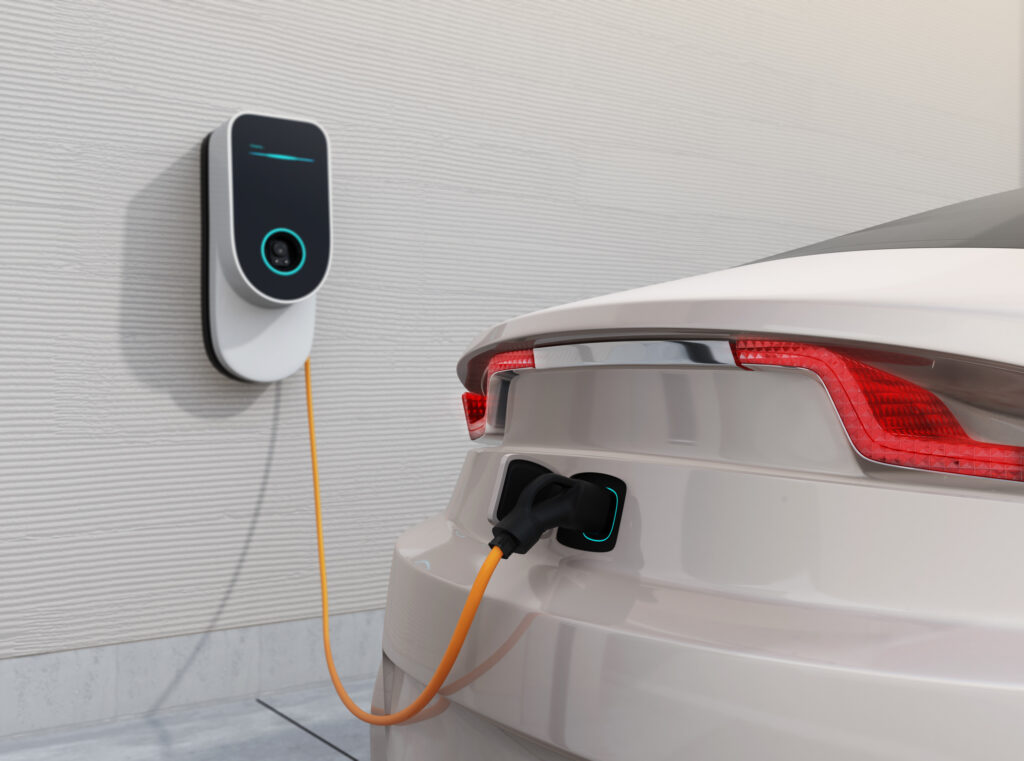
You can charge your electric car using any standard wall outlet. Image: Freepik
Charging at home
Many people opt to charge their second-hand electric vehicles at home — and for good reason! Charging at home means your car has a designated spot to charge and has enough time to completely replenish its battery.
To be able to charge your electric car at home, you’ll, of course, need some space — whether that’s in a garage or at a personal parking spot.
Types of home chargers
There are two main types of home charging stations: level 1 charging and level 2 charging.
Level 1 involves charging your electric vehicle with the charger that comes with the vehicle. These chargers can be plugged into any standard wall outlet with the other end plugged directly into the car — and they typically charge 200 kilometres within 20 hours.
Level 2 chargers are sold separately from the vehicle. These chargers require a more complicated setup as they’re usually wired directly into your house’s electrical system. Depending on your charger, they can charge your car between three and seven times faster than the charger that comes with your car.
Some car owners opt for these bulkier charging stations — they’re expensive but they also charge your car faster. Image: Depositphotos
How much does home charging cost in the Netherlands?
With level 1 home charging stations, costs are included in the purchase of the car itself. Level 2 chargers (depending on the model and voltage) can be anywhere between €900 to €4,000, including installation costs.
The average kilowatt-hour (kWh) cost to charge your car is currently €0.22. Each car has its own criteria for how many kWh it needs to drive a certain distance, so it’s best to check how many kWh a full charge is for your car and how far it drives with a full battery.
Charging electric vehicles on the street in the Netherlands
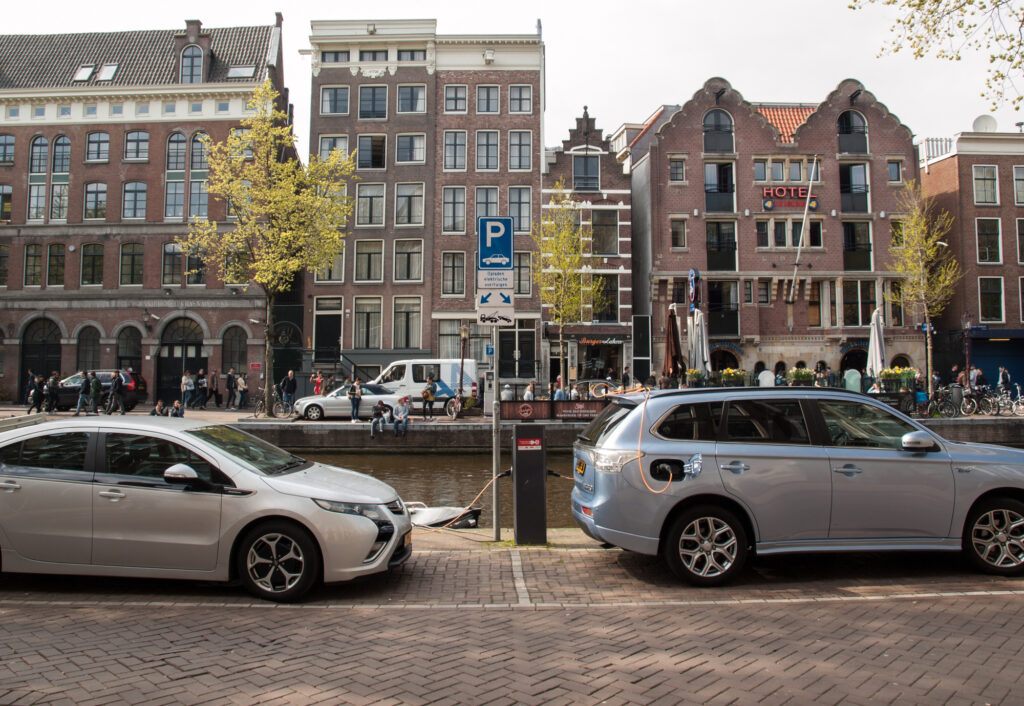
In all large Dutch cities and towns, the municipalities have set up designated parking spaces and charging stations for electric vehicles.
Finding parking can be a nightmare in big cities like Amsterdam — these types of charging points really come in handy! Image: Depositphotos
If you park in an electric vehicle parking space, your car must be connected to a charging station. There’s usually no time limit on charging, but if you’re charging in a neighbourhood, it’s best to consult with your neighbours to establish some parking and charging etiquette.
Tip: If you’re charging your second-hand electric vehicle in a Dutch city, it counts as free parking! Although available charging spots are a little difficult to find in the city, as long as your car is charging, you park for free.
Charging passes
The good news is that, if necessary, electric vehicles in the Netherlands get priority on parking permits. However, to access charging stations, you will also need a charging pass. You can request both the pass and the permit from your municipality.
Once you’ve received them, you can use the charging pass to scan the charging point, which will then supply electricity for your car.
On average, you can expect to pay a bit more for public charging compared to charging at home. For example, in 2025, it will cost you €0.34 per kWh in Amsterdam.
💪 The range of your second-hand electric vehicle
Electric vehicle drivers often have range anxiety — the fear that their battery will die mid-trip. Of course, this may be even more of a concern when purchasing a second-hand electric vehicle.
Not to worry though! Second-hand electric vehicles will most likely only show minor signs of battery degradation. In other words, the car battery is only a little worn out compared to a completely new one.
If you’re buying a second-hand hybrid car from a dealership, the dealer can give you all the info you need. Image: Freepik
The condition of your second-hand electric vehicle’s battery depends on a few things, like the age of the car, previous and current usage (long vs. short drives, frequency, highway vs. city driving), and overall battery life.
On average, electric vehicles have a range of about 315 kilometres, which should be more than enough to find a charging station (especially if you’re driving within the Netherlands). Depending on your car model, the range can be from 270 kilometres all the way up to 615 kilometres per charging cycle.
🛠️ Taking care of your Dutch second-hand electric vehicle
Of course, once you own a second-hand electric vehicle, there are a few things to keep in mind when you do maintenance.
How does second-hand EV maintenance work in the Netherlands?
Maintaining a second-hand EV is similar to maintaining a regular internal combustion engine (ICE) vehicle. Every so often, you should take your vehicle to your local car repair and maintenance shop.
You can get everything checked up to make sure the car is up to par — the tyres, braking system, motors, you name it.
Most repair and maintenance shops offer services for electric vehicles, so things like battery check-ups and replacements, as well as charging system maintenance, are easily accessible.
Maintenance and check-up costs vary depending on your auto shop and the extent of your maintenance.
Kleine beurt versus grote beurt: what’s the difference?
When you get around to maintaining your electric vehicle, you might come across the terms kleine beurt and grote beurt. But what do they mean?
Essentially, a kleine beurt refers to a minor service, and a grote beurt refers to a major service on your car. Minor services are cheaper and entail general maintenance on your car, while major services involve more intense inspection and replacements.
Getting your hybrid or electric vehicle checked is essential — better safe than sorry! Image: Depositphotos
Mechanics usually advise drivers to bring their car in for a service as follows:
Every 15,000 kilometres driven requires a minor service. Even if you haven’t driven 15,000 kilometres though, mechanics recommend your second-hand car gets a minor service every year.
Every 30,000 kilometres driven requires a major service. If you haven’t driven 30,000 kilometres (but have driven more than 15,000 kilometres), a major service on your car is recommended every two years.
Minor services cost between €100 and €200 on average, depending on your usual car repair shop. However, the price can be a bit higher depending on what parts of your car need replacing and maintenance.
Major services are (obviously) a lot pricier. The cost of a major service typically falls between €200 and €400, also depending on your car repair shop and which parts you need to replace and maintain.
Sometimes, it’s possible to combine the APK (the general yearly inspection your car goes through) with a major service on your car, which would total between €700 and €1,000.
Car insurance in the Netherlands
To be prepared for the worst, it’s important to have insurance on your hybrid or electric vehicle. In fact, car insurance is compulsory in the Netherlands, and you’re required to have it to legally drive here.
The nice thing about Dutch car insurance is that it insures the car, not the person. This means that, as long as they have your permission, anybody can legally drive your car.
There are three types of car insurance policies that you can choose from:
Third-party liability (WA verzekering)
Extended liability (WA beperkt casco)
All-risk insurance (Allriskverzekering)
There are plenty of companies that offer car insurance for every occasion, such as Univé. We recommend you do some research and find one that fits your wants and needs.
Roadside assistance (wegenwacht) in the Netherlands
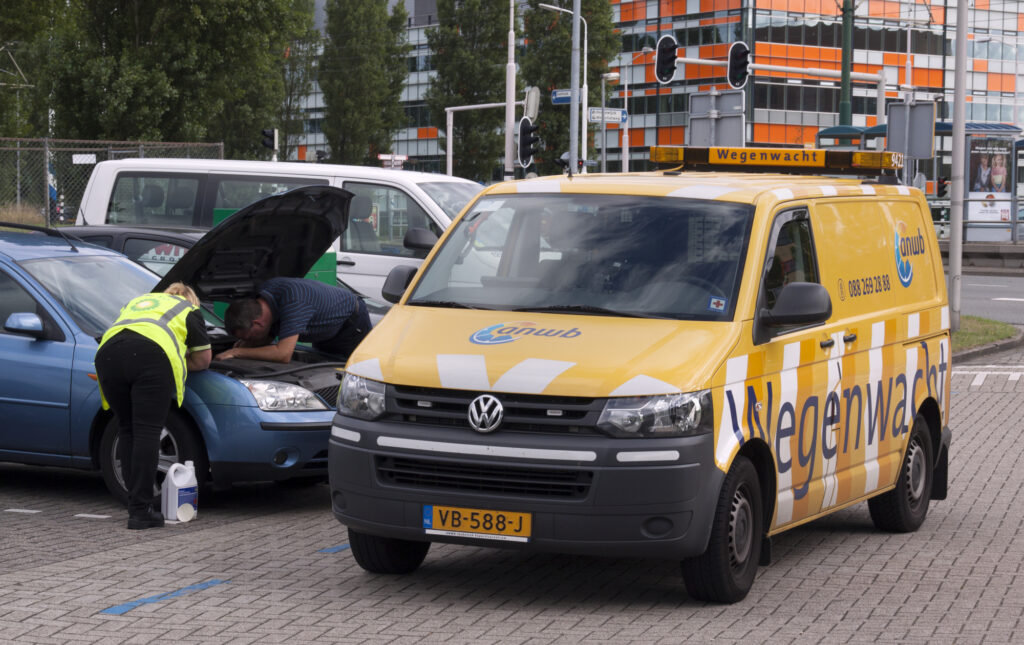
While we all hope this will never happen to us, there’s always the chance of running into car trouble while on the road. Whether it’s a flat tire or broken lights, you can easily access roadside assistance (also known as Wegenwacht in Dutch) in the Netherlands.
ANWB is the most common roadside assistance provider in the country and they even offer membership plans that provide roadside assistance throughout Europe! (Definitely useful if you plan to take road trips often).
All subscriptions include towing and repair services if you happen to run into car trouble while travelling.
You can always rely on roadside assistance for quick and efficient help with your vehicle! Image: Depositphotos
The ANWB also has a specific procedure in case they get a call for a hybrid or electric vehicle that needs assistance. In any case, you can be sure your hybrid or electric vehicle is in good hands if it ever breaks down.
💶 Tax exemptions and incentives for electric and hybrid cars in the Netherlands
If you buy a hybrid or electric vehicle (whether it’s new or second-hand), you might be eligible for some tax exemptions and allowances from the Dutch government. Let’s lay these out. 👇
Exemption from motor vehicle tax (MRB)
Both fully electric and hybrid cars can get some tax exemptions when it comes to motor vehicle tax (MRB).
Not sure what the MRB is? We got you. MRB refers to the general road tax you have to pay when you own a vehicle.
Fully electric cars now get a 75% discount on motor vehicle tax (MRB). This will reduce to 25% in 2026 through to 2029.
Meanwhile, hybrid electric cars that emit less than 50 grams of CO2 per kilometre will have to pay 75% of the standard MRB rate. This will then increase to 100% (the full rate) in 2026.
Environmental investment allowance (MIA)
Entrepreneurs and businesses in the Netherlands also get special incentives to buy electric cars for their companies.
Anyone who is investing in environmentally-friendly techniques can also get extra tax benefits. New, fully electric cars are eligible for an environmental investment deduction (Milieu-investeringsaftrek) of up to 27% of the total cost (up to €40,000)!
What does this mean? You could be entitled to €5,000 for owning a new, fully electric car! However, the car also has to be less than 6 months old or with less than 6,000 kilometres driven on it.
While there are a lot of things you’ll have to keep in mind when owning a second-hand hybrid or electric car, there are a lot of perks that come with it too!
Once you’ve considered and sorted all of these factors, you’re more than ready to own an awesome second-hand electric vehicle. Happy driving!
Are you considering owning a second-hand electric vehicle in the Netherlands? What are your tips for owning and maintaining an electric vehicle? Tell us in the comments!
According to Buienradar, tomorrow will be the last day we can confidently say lekker weertje (nice weather) before it turns cooler.
After a brief taste of summer, June will bring lower temperatures and more unstable weather conditions.
What was the point of bringing out all our summer clothes? 😩
This morning and tonight
This morning welcomed some clouds moving gradually from the northwest to the southeast. In the southeast, there’s a chance of a brief rain shower.
Later today, however, skies will begin to clear in the northwest with the sunshine peaking through. ☀️
The afternoon will remain generally dry for the north and the west of the country. Temperatures will vary depending on the region, but one thing is certain — go enjoy a terrasje while yous still can.
Will you need a jacket? That depends on where you are:
The Wadden area: maximum of 16 degrees
East and southeast: locally up to 20 degrees
Wind will be moderately blowing from the west
Tonight, the weather will remain dry across the country with clear skies and some sunshine in the evening. However, if you plan on sipping late into the night, know that temperatures will drop significantly.
Coastal areas: minimum of 11 degrees
Eastern regions: temperatures may locally fall to 4 degrees
Tomorrow and the days that follow
Tomorrow morning will begin with sunshine and some scattered clouds to foreshadow the weekend.
As the day goes on, the clouds will win the unofficial battle and become denser in the afternoon. Light rain is expected in the north and west later in the day.
Despite the clouds, there is a silver lining: temperatures will remain balmy:
Along the coast: up to 19 degrees
Southeast: locally reaching 25 degrees
The upcoming days? They will keep us wondering how we’re supposed to fit an umbrella, flip flops and a windbreaker all in one bag. 😖
The Dutch have given the world many things: windmills, stroopwafels, and questionable liquorice – but perhaps the most infamous is the world’s first financial bubble: tulip mania.
In the 1630s, tulip bulbs in the Netherlands were so valuable that people traded land, homes, and life savings for a single flower.
What started as a colourful garden trend quickly spiralled into economic madness.
A blooming obsession
Tulips arrived in the Netherlands from the Ottoman Empire in the late 16th century, and their vibrant colours–especially rare striped varieties–made them highly desirable.
The more unusual the pattern, the more valuable the bulb.
These flowers are beautiful, but they were once also extremely expensive. Image: Depositphotos
As the Dutch Republic’s wealth soared from maritime trade, so did its appetite for status symbols. Owning exotic tulips became a sign of sophistication.
It wasn’t long before people began buying and selling bulbs not just as flowers, but as investments.
In taverns and backrooms, deals were made on slips of paper. Futures contracts became popular, allowing traders to speculate on bulbs they didn’t even own yet.
Prices soared. A single bulb of the legendary Semper Augustus variety was said to be worth the same as an Amsterdam canal house–a real estate equivalent that still raises eyebrows.
The bubble bursts
Like all good things inflated by hype, tulip mania didn’t last. In February 1637, during an auction in Haarlem, no buyers showed up. Panic ensued. Within days, prices collapsed.
Those who had invested fortunes were ruined. The speculative dream had wilted.
The economic fallout wasn’t as disastrous as some modern myths claim. The Dutch economy didn’t collapse — but the cultural embarrassment lingered. The story of tulip mania became shorthand for irrational exuberance and out-of-control plays.
Still blooming today
Despite the crash, the Dutch never really fell out of love with tulips. Today, the Netherlands is the world’s largest producer and exporter of tulip bulbs, with colourful fields stretching across the Bollenstreek.
However, tulips still remain an important asset in the Netherlands. Image: Depositphotos
Visitors from around the world flock to Keukenhof Gardens each spring to see over seven million blooms. Tulip mania may have ended in disaster, but the flower’s appeal never faded.
Even now, tulips are woven into Dutch culture, from seasonal flower parades to international exports. And let’s be honest, a bouquet is much safer than betting your house on a single bulb.
Lessons from history
Tulip mania is still referenced today whenever markets overheat — from Beanie Babies to NFTs. It’s a reminder that when something beautiful becomes wildly overpriced, the crash can be just as spectacular.
It also proves that the Dutch were early adopters not just of finance, but of fabulous marketing. After all, who else could convince the world that a flower bulb was worth a mansion?
And guess who ends up footing the bill? Yep, you, the passenger.
Cheap winter holidays? Gone
According to Ryanair, this tax is now “irreparably damaging” Dutch air travel.
So instead of sticking around, they’re packing their (very small, cabin-approved) bags and heading off to tax-friendlier skies like Sweden, Italy, and Poland. ✌️
Currently, Ryanair is still offering summer flights from Maastricht to five destinations: Bari, Zadar, Porto, Alicante, and Barcelona Girona.
Come winter, however, all of that will vanish. (Much like your holiday tan. 😉)
And what’s left at the airport?
The budget airline’s departure leaves the region with slim pickings — and longer (and pricier) trips to Schiphol, Eindhoven, or even Belgium for Maastricht residents.
For frequent fliers who relied on Ryanair for cheap getaways, Corendon is the only other budget airline flying from the region this summer. However, you can kiss your dreams of a Spanish city break goodbye, as the airline only offers five weekly flights to Bulgaria and Greece.
So if Maastricht was your go-to for quick escapes, it might be time to start recalculating your route or bracing for pricier tickets. 🧳💰
Will you miss those flights from Maastricht Airport? Tell us more in the comments.
The Netherlands is famously a well-organised, well-developed, and economically thriving country, so why are they also known for being so overwhelmingly stingy?
The Dutch respect for order and fairness is visible even in the tiniest details of everyday life.
Being stingy is not a purely Dutch phenomenon; many Nordic countries have similar traditions, but it is noticeably ever-present in the Dutch lifestyle.
After a dinner with friends, it is not uncommon to receive several tikkies for as little as a few euros per person. (Tikkie is a popular Dutch money-transfer system. 💸)
Some non-Dutch inhabitants might find the stingy tradition inconvenient, stressful, or even rude. Still, the Dutch love for order, fairness, and clarity makes it hard to challenge their habits on this particular topic.
It is also crucial for the Dutch to stay up to date on the latest “bonus” offers at their local grocery store, or even travel to a different one to save a few cents.
To the Dutch, not having a bonus card is almost like not having a bank card or a public transport card. After all, why would you pay €1,75 for a loaf of bread when you can pay €1,25?
How much the Dutch love saving money is also visible in the rental market. 🏙️
Newly settled internationals who have just started renting an apartment in a Dutch city might feel relieved and proud to have landed a contract that promises any repairs or fixes to be covered by the landlord.
They are in for a nasty surprise, however, since Dutch landlords are famously hesitant to go out of their way to follow up on their promises.
Why do they do it?
There are several theories behind why the Dutch are so stingy.
Some say it is part of the culture of independence one can find in many western countries – that the Dutch are obsessed with being self-sufficient, and that saving every possible cent is part of being independent.
Others say saving is simply a part of being a well-developed, economically thriving country — if you don’t save, you won’t get rich!
The most likely explanation is probably that the Dutch are famously organised and structured, and that this quirk is particularly visible when it comes to money. 🤷
Why is it quirky?
In most places around the world, people wouldn’t send a tikkie request for €2 after a casual dinner with friends.
In most places, people wouldn’t have the energy to change their grocery habits for the sake of saving a few cents.
But the Dutch are not like people in other places, and if there is money to save, it is considered obvious, not rude, to make sure you save it.
Should you join in?
Being stingy is not for everyone, and if you can avoid it, why not? That being said, saving money, even if it means asking your friends to pay for a tablespoon of hummus, is always convenient.
Lay’s and Doritos have a brand-new look in the Netherlands, but your wallet might not love it. The iconic chips now appear in chic, boxy outfits that scream ‘premium,’ without saying why.
As revealed by NU, the new packages are resealable and durable (great for avoiding sad, soggy chips), but snack fans aren’t exactly celebrating. Let’s find out why. 👇
Pretty box, pretty price
This glam glow-up comes at a price, literally. 👀
Lay’s Max Natural chips in a bag cost €10.87 per kilo, while the same chips in a box cost? A whopping €19.12 per kilo.
Doritos fans, you’re not spared either. That cheesy goodness now costs €18.50 per kilo in a box, versus €10.99 in a bag.
Unless that box has a built-in Netflix subscription, it’s no surprise people feel salty. 🫣
A glow-up or just glam-flation?
Those sleek new boxes contain the same amount of product as a bag… just with a massive increase in price. 😬
In conversation with RTL Nieuws, food reviewer Eke Bosman calls it “one of the most scandalous shrinkflation actions” they’ve seen in a long time.
“The chips have become 6.50 euros more expensive per kilo,” Bosman explains. “That is a price increase of 54%.”
Food producers have already caught heat for trimming portions while hiking prices, and now Lay’s is strutting down the same snack-inflation runway.
PepsiCo, the company behind Lay’s and Doritos, is currently keeping mum about whether the classic bags are gone for good or why we’re paying designer prices for couch snacks.
But let’s just say we’re rage-crunching in style. 😅
So, what’s your take? Is the new Lay’s packaging a crisp innovation or just a fancy way to empty your wallet faster? Let us know if you’re box-curious or bag-loyal. 👇
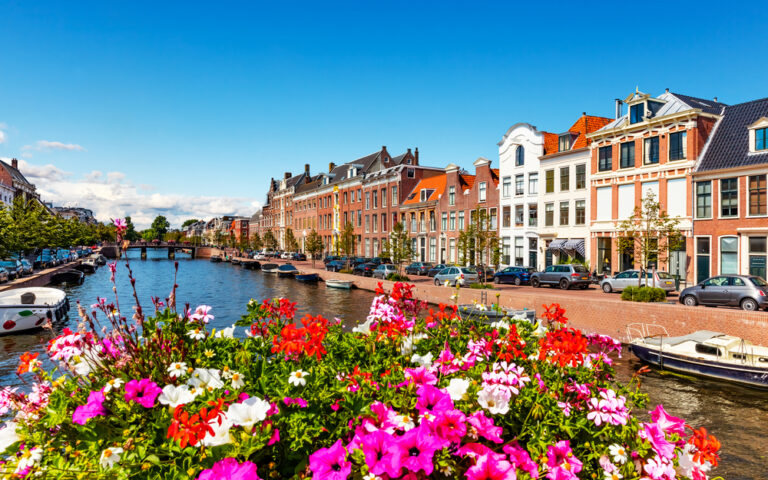
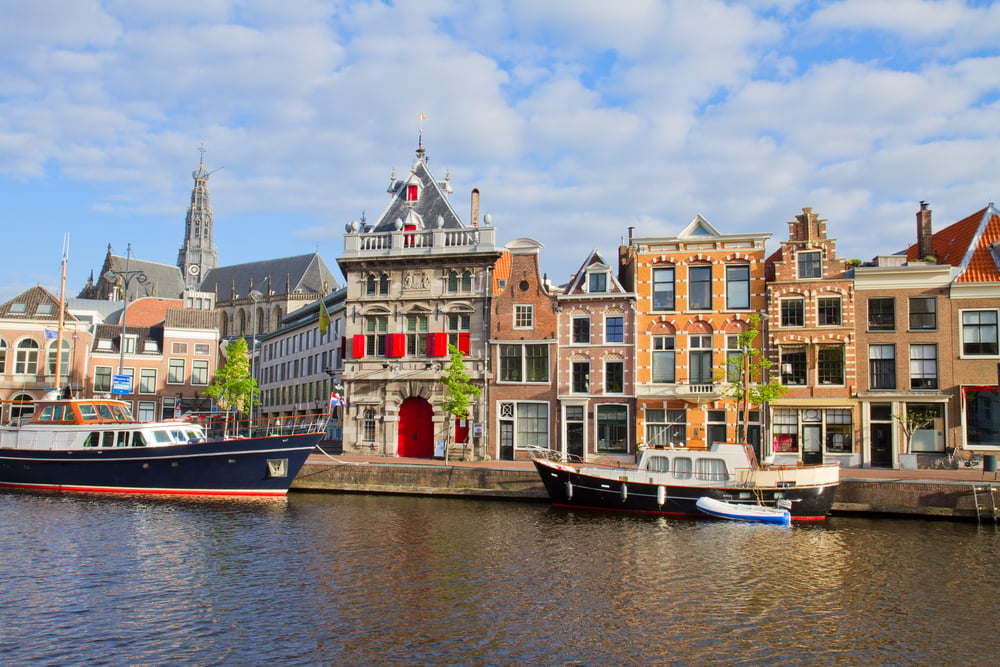
So, you’ve found your way to Haarlem, the Netherlands, otherwise known as ‘little Amsterdam’. However, now that you’ve landed in the picturesque streets, you’re likely wondering: what is there to do in Haarlem?
You’re in luck, as the centuries-old city has heaps to offer. As the second-largest city in North Holland, these canals and winding streets are chock-full of history, culture, and intrigue!
This post might have affiliate links that help us write the articles you love, at no extra cost to you. Read our statement.
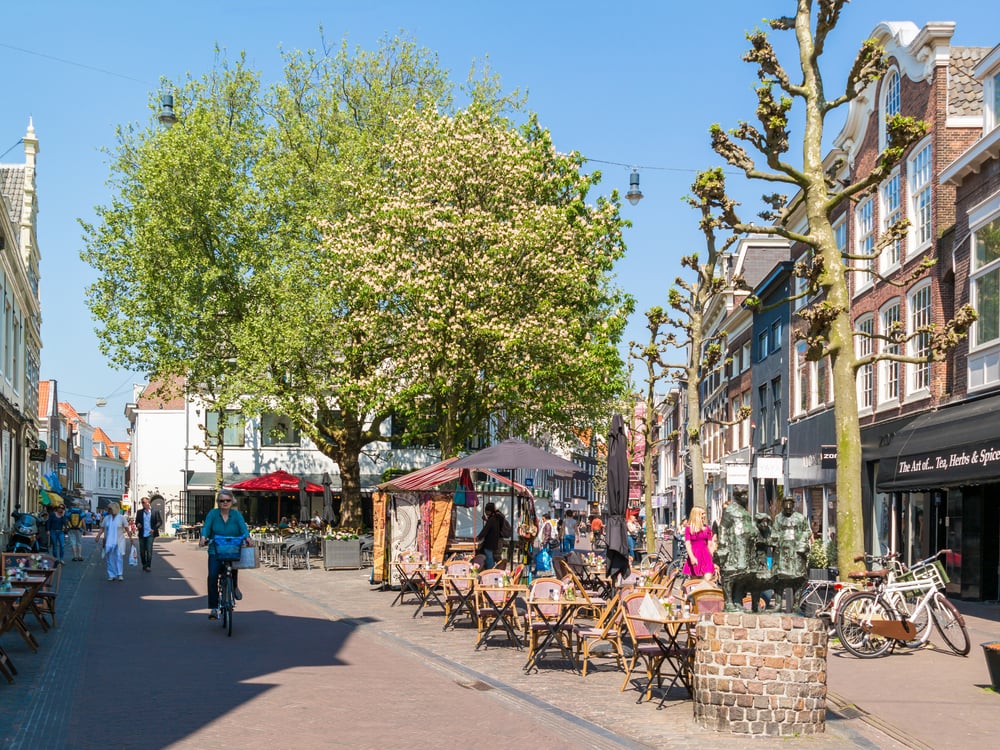
1. Take a shopping trip along the Grote Houtstraat in Haarlem
If you’re in the mood to spend an afternoon shopping the sales, a trip down Haarlem’s Grote Houtstraatis just the thing! 🛍️
Grote Houtstraat is one of the Netherlands’ longest (and oldest) shopping streets. Originally referred to as just ‘houtstraat’(Wood Street), this now bustling area was initially the major road leading from Haarlem’s city square to the forest. 🌲
Enjoy a little retail therapy on the bustling streets of Haarlem. Image: Depositphotos
Make a pit stop at one of the many high street stores, or grab a latte at Barista Cafe and sip away while you watch shoppers migrate along the street.
But remember; park your bike before you hit the street, as the Grote Houtstraat is foot traffic only. 🚶♂️
💰 Price: Free, unless you choose to shop ⏰ Opening hours: Most stores are open from 9 AM until 6 PM, Monday to Friday, with different times on the weekends 📍 Location: Grote Houtstraat, Haarlem
2. Hop on an inspiring cruise of Haarlem along the Spaarn
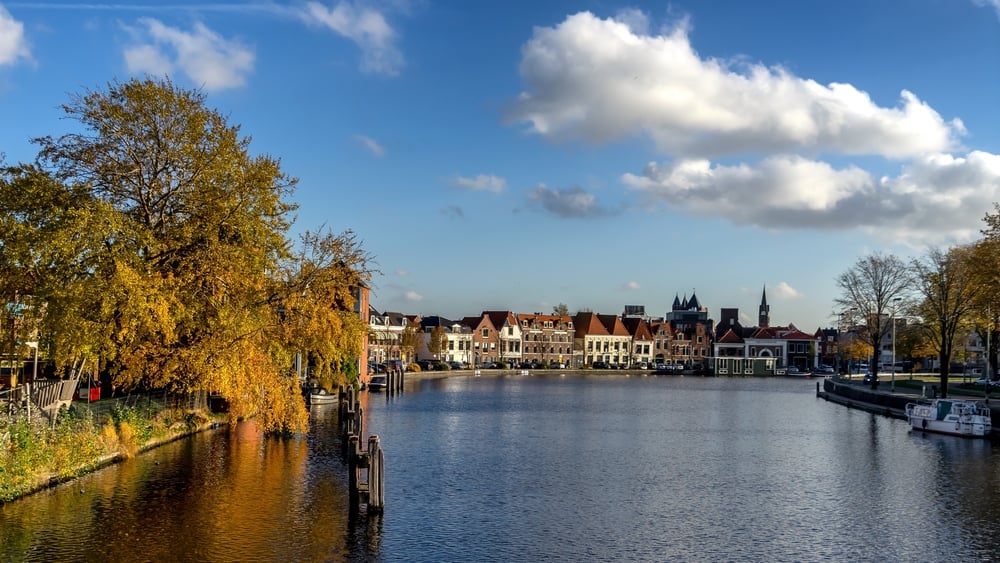
Another amazing thing to do in Haarlem is to jump on a boat and watch the city glide by from the comfort of the Spaarne River.
Take a relaxing cruise along the Spaarne River. Image: Depositphotos
Running all through Haarlem, Heemstede, and Spaarndam, this river is perfect for spending an hour or two watching the sights. From the tall Dutch buildings to even the ducks swimming along the banks, there’s so much to see. 🦆
You can usually catch a boat in the centre of Haarlem, and there are a variety of ways to cruise and enjoy. You can take a public cruise for around €19.95 per person or splurge on a private boat with a captain for around €180.
💰 Price: Ranges from €19.95 to €180+ ⏰ Opening hours: Typically 11 AM to 4 PM, with longer opening hours in the summer 📍 Location: A variety of pick-up points along the river, depending on the boat company
3. Take a trip to the Netherlands’ oldest museum
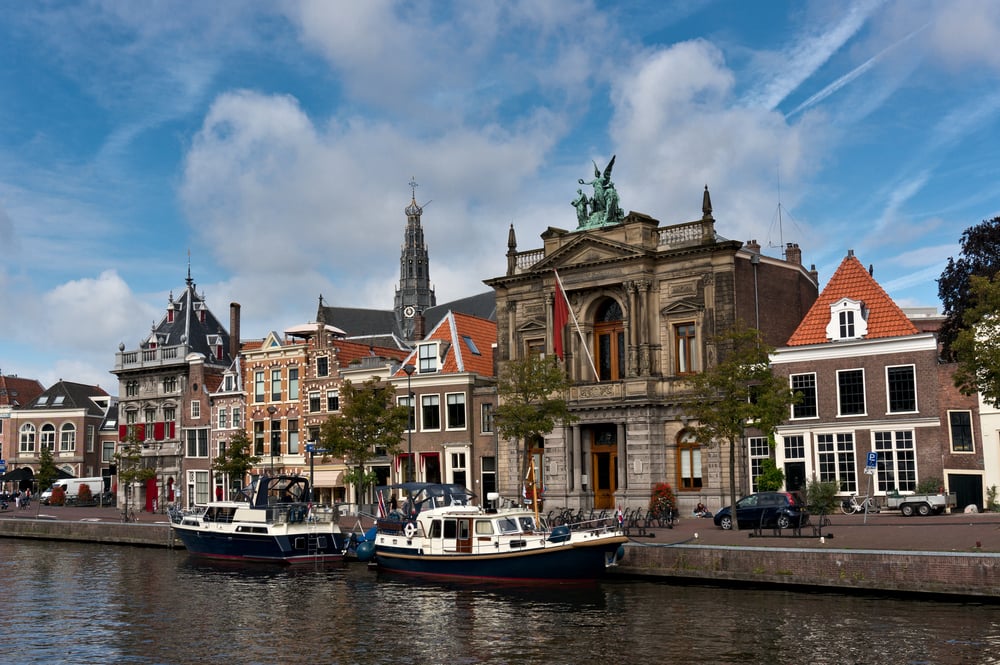
There’s something for everyone at Teylor’s Museum! Image: Depositphotos
If you’re looking to spend an afternoon invested in a museum full of culture, art, and beautiful galleries that will leave you breathless, take a trip to Teyler’s Museum, Haarlem.
Living up to its reputation as the Netherlands’ oldest museum, the astoundingly old building has been open to the curious since 1784.
With art exhibitions and lots of family-friendly stuff to bring the kids along to, you’re sure to spend a vibrant day at Teyler’s. 😍
💰 Price: €17.50 for adults, €2.50 for children ⏰ Opening hours: Tuesday-Sunday, 10 AM to 5 PM 📍 Location: Spaarne 16, 2011 CH Haarlem
4. Visit the Corrie Ten Boom house to uncover a Dutch WWII icon
Haarlem’s version of the Anne Frank Museum, the Corrie Ten Boom House, tells the story of a family that helped to hide fugitives during World War II.
The Ten Boom family originally owned a watch shop and lived in the rooms above the store, but they and the house became safe havens for fugitives.
Built into an iconic Haarlem home just like these, the museum is a great option for those interested. Image: Depositphotos
Corrie Ten Boom, who hid fugitives behind a false wall in her bedroom, miraculously survived the war after being arrested and brought to a concentration camp. The museum is named after her as she was the only family member to survive the war.
The house has now been converted into an exhibition and museum, telling the story of the Ten Boom family and the people they saved.
💰 Price: Free entrance, but donations are welcome ⏰ Opening hours: Tuesday to Saturday, 10 AM to 4 PM 📍 Location: Barteljorisstraat 19, 2011 RA Haarlem
5. Watch a movie in a converted prison in Haarlem
Yes, you read that right. Here in our beloved town of Haarlem, you can, in fact, catch a screening of the latest film in the basement of a converted prison at De Koepel! 🎥
The prison was converted into housing for asylum seekers in the Netherlands in 2016. Today, the building houses an impressive cinema, coworking spaces, a café, a mini arcade, and even escape rooms!
One of the best things to do in Haarlem on a rainy day? Go for the cinema, and stay for the view of old prison cells while you sip a coffee and dissect the themes of the movie you just saw. 🤔
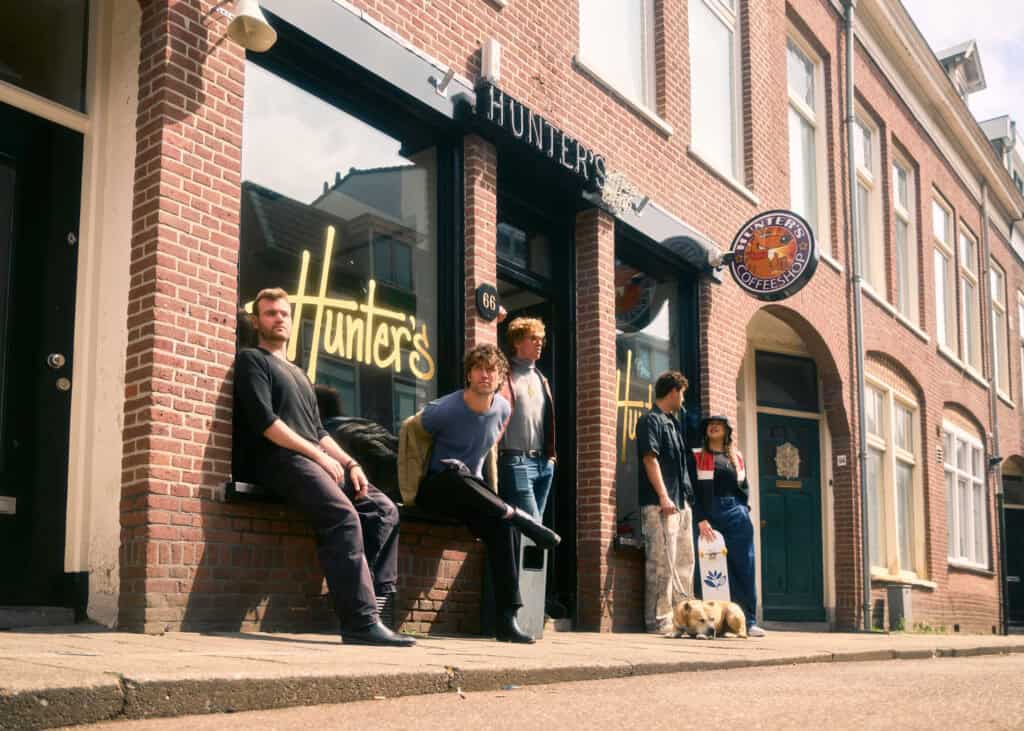
Unwind in the historic centre of Haarlem. Image: KLEIN MEDIA/Supplied
Hunter’s Coffeeshop is one of the most established and respected coffeeshop brands in the world — and this location in Haarlem brings that same trusted quality to one of the Netherlands’ most charming cities.
Hunter’s Haarlem offers visitors aged 18+ a relaxed, stylish space to unwind and enjoy a true Dutch coffeeshop experience.
Whether you’re a local or just visiting Haarlem’s historic centre, this is the perfect spot to take a break and enjoy top-tier service in a welcoming atmosphere.
💰 Price: Varies — ask the friendly budtenders for more details ⏰ Opening hours: Daily from 7 AM to 2 AM 📍 Location:Schoterweg 66, 2021 HP Haarlem
7. Visit Haarlem’s Museum Van de Geest
Awarded the title of European Museum of the Year 2022, this museum hosts an array of interesting exhibitions focused on artwork about the human mind.
They also offer a low-stimulus museum visit for visitors who can become overwhelmed by loud music and bright lights. This is a great adjustment for autistic or disabled persons visiting the museum as they can experience the history and artwork without feeling overwhelmed.
💰 Price: €20 for adults, €10-15 for children ⏰ Opening hours: Wednesday to Sunday, 11 AM to 5 PM 📍 Location: Schotersingel 2, 2021 GE Haarlem
8. Take a (free!) walking tour around Haarlem
Yup, that’s right. In our dear city of Haarlem, you can, in fact, go on a free walking tour and explore the sights on foot. 🚶🏻♂️
The tours meet at the Grote Markt on Fridays and Saturdays and are a perfect opportunity for those of us with tight wallets to enjoy some well-deserved sightseeing in Haarlem.
Did you enjoy the tour? It’s nice to give the tour guide a tip so they can continue to run them in the future.
Explore the wonders of Haarlem with your own two feet. Image: Depositphotos
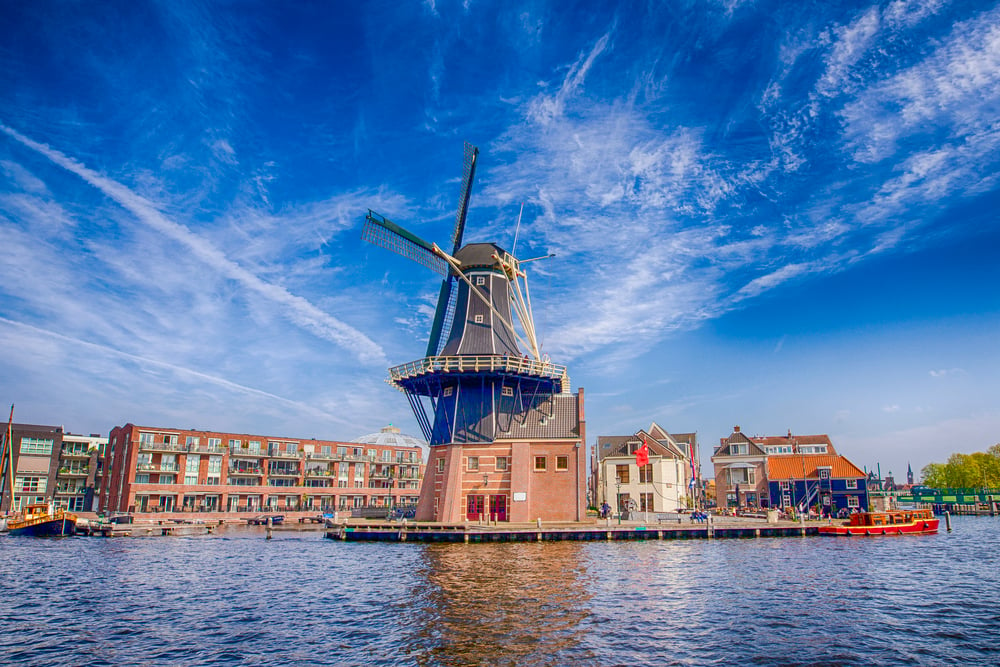
A few companies organise tours around the city, which usually last approximately two hours. These tours take visitors to major sights such as the Grote Markt and the Molen de Adriaan and tell the history of Frans Hals.
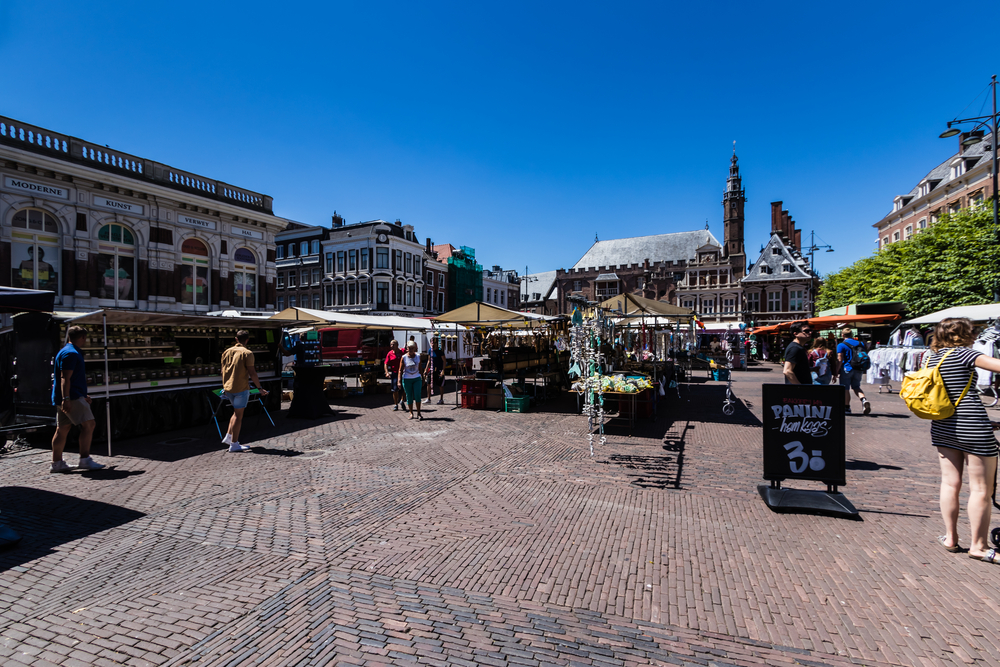
For the authentic Dutch shopping experience, take a visit to the Grote Markt on a Monday or Saturday. Shop the small businesses and pop-up shops and find some well-deserved treats! 😉
Explore the streets of Haarlem while you wander around the Grote Markt. Image: Depositphotos
Located just steps away from St. Bavokerk, and a five-minute walk from the Grote Houtstraat, you can easily plan a day of fun activities if you start in the cultural centre of Haarlem city.
10. Learn about the history of iconic Dutch windmills at Molen de Adriaan
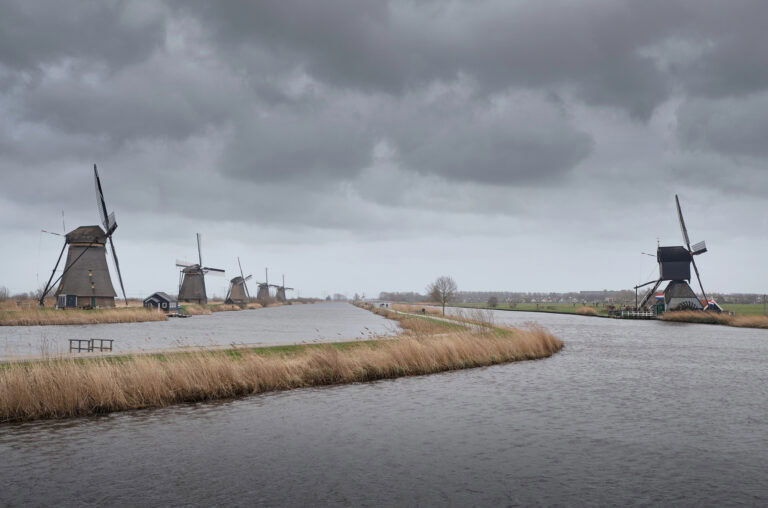
For most tourists in the Netherlands, the windmill is an object of curiosity. If you want to take a peek inside a real, working windmill, the Molen de Adriaan is the place to be.
Learn about the iconic history of the windmill at the Molen de Adriaan. Image: Depositphotos
This family-friendly museum is situated along the Spaarne and makes for a great activity if you’re looking for something to do in Haarlem on a colder Dutch day. 🌨
There are loads of models and installations for those visual learners, and you can take a guided tour that will make you a windmill expert!
💰 Price: €7.50 for adults, €3.50 for children ⏰ Opening hours: Monday to Friday, 1 PM to 5 PM; Weekends, 10:30 AM to 5 PM 📍 Location: Papentorenvest 1A, 2011 AV Haarlem
11. Play a game of cards at the Boardroom Café in Haarlem
In the mood for a bit of competitive Dutch Monopoly, where you can own the miniature Grote Houtstraat, or want to test the strength of your friendship with UNO? Take a visit to the Boardroom Café!
Only a few minutes walk from Haarlem Station, you’ll find this lovely café situated in South Haarlem. You can not just purchase games to bring home, but you can also sit and play for hours with your mates.
Practise a bit of Dutch (helaas pindakaas!), and make sure you’ve got those cards hidden up your sleeve. 😏
💰 Price: €6 per person for unlimited board-game usage ⏰ Opening hours: Open Tuesday to Sunday, from 11 AM until 11 PM 📍 Location: Kruisweg 60, 2011 LE Haarlem
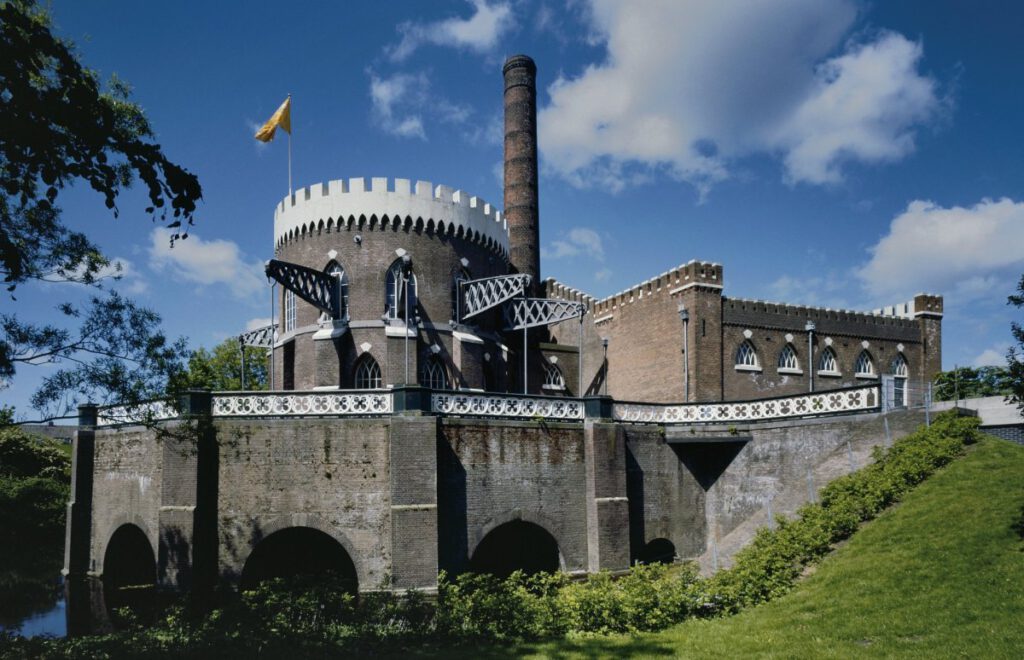
12. Visit Haarlem’s engaging Museum de Cruquius
A visit to the Museum de Cruquius is a top recommendation when looking for things to do in Haarlem.
The museum occupies an old pumping station along the Spaarne, offering a more than immersive experience into the history of the reclaimed land that most of the Netherlands is built on — a.k.a, polders!
This museum is accessible for the family with children’s tours on offer. Of course, there’s also plenty to intrigue adults, as the museum also offers a theatrical retelling (with actors!) of the history of Nicolaus Cruquius, after whom the museum is named.
💰 Price: €17.50 for adults, €11-13 for kids ⏰ Opening hours: Monday to Friday, 10 AM to 5 PM; Weekends, 11 AM to 5 PM 📍 Location: Cruquiusdijk 27, 2142 ER Cruquius
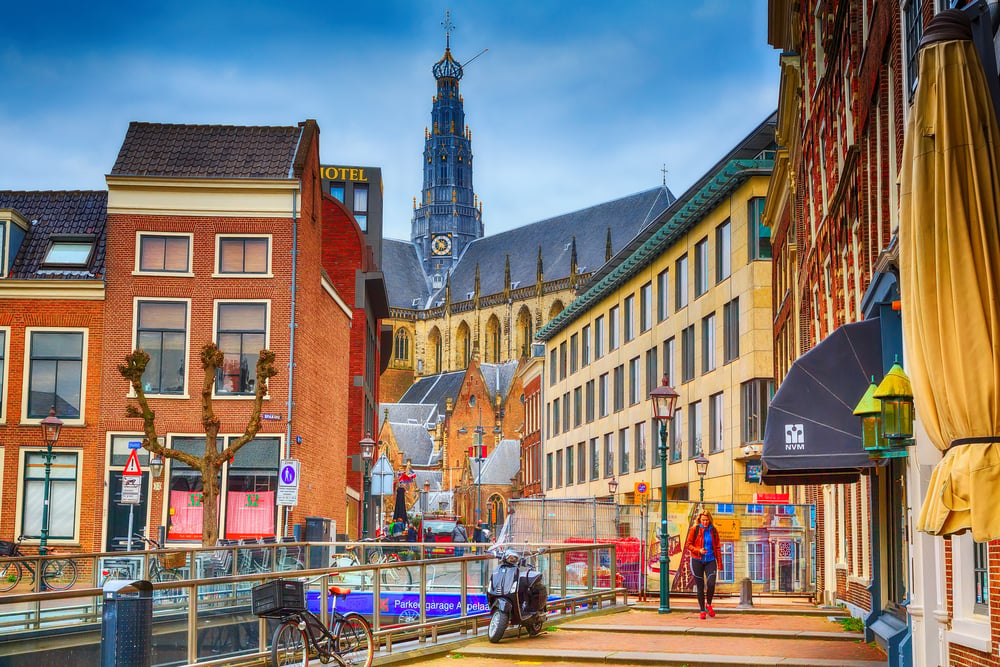
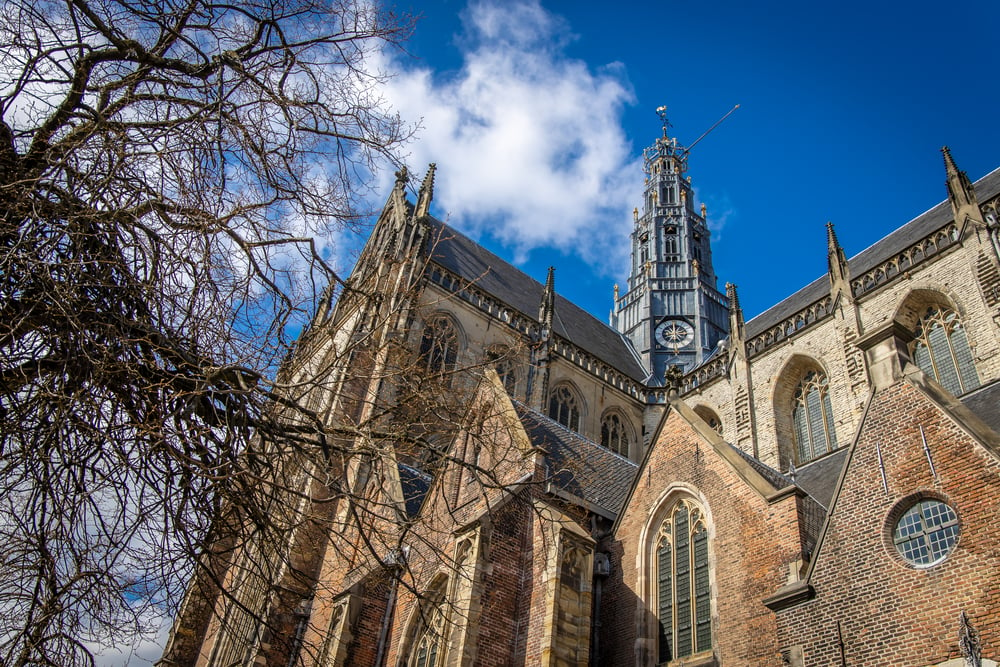
13. Visit the St. Bavokerk in Haarlem Centre
This mammoth church is a casual hundreds of years old, after being constructed between 1370-1400. With a huge tower that once served as a fire watch and an impressive clock, the exterior of this church will leave you with the impression of being a very small fish in a very big pond. 🐟
Check out the ancient St. Bavokerk on a day trip to Haarlem. Image: Depositphotos
A lovely aspect of this historical church is that visitors can catch a free concert performed by young artists and musicians in the area. Donations are always welcome at the concerts, which take place twice weekly on Tuesday evenings.
While the church is open Monday to Saturday for visitors and worshippers alike, it’s only on Saturdays that one can take a tour of the church — and learn about its rich history!
💰 Price: €4 for adults, €2 for children ⏰ Opening hours: Saturdays at 2 pm for tours; open Monday to Saturday, 10 AM to 5 PM 📍 Location: Grote Markt 22, 2011 RD Haarlem
14. Take a calming stroll through Haarlemmerhout
This park, with its huge forests or woodlands vibes, is the oldest in the Netherlands and offers ample opportunities for a relaxing family outing or a romantic couple getaway.
Enjoy a relaxing stroll through the forest with the people you love. Image: Unsplash
You can watch the changing seasons as you wander through the woodlands and admire the orange of autumn and the silver of Dutch winter. It’s a truly magical place if you’re looking to let thoughts wander.
With a café on site, you can even choose to have some fanciful afternoon tea and live out your dreams of royalty.
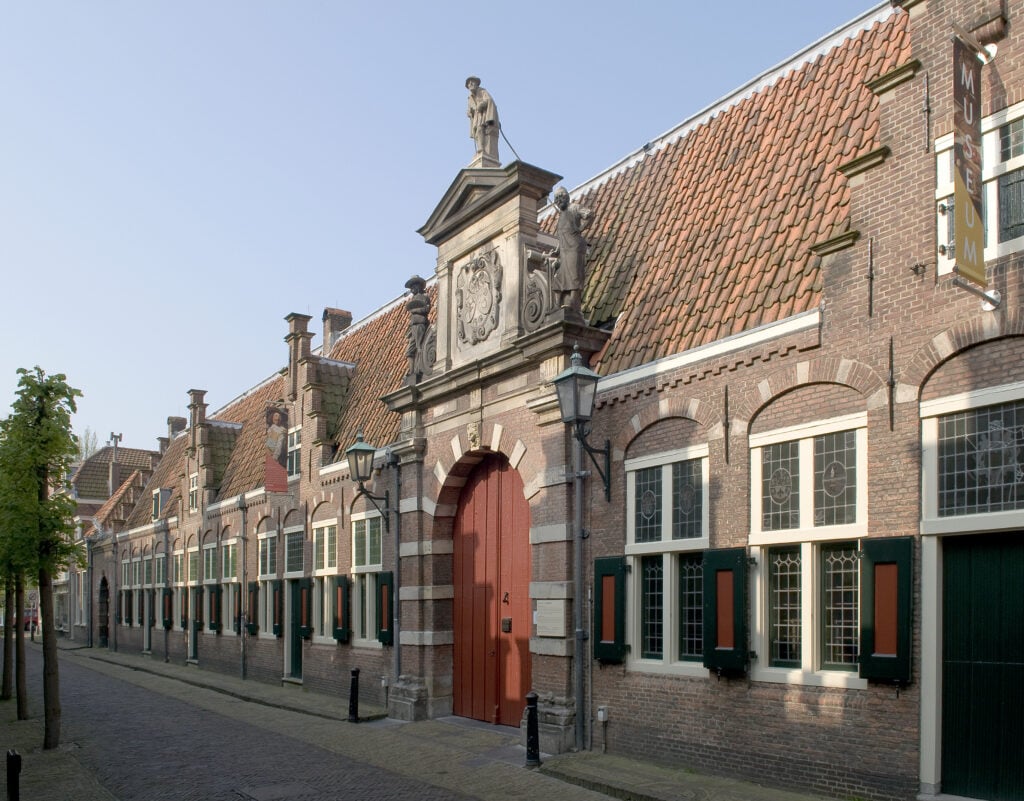
If you’re an art nut, looking for something to do in Haarlem, the Frans Hals Museum is the place to be! There, you can gaze in awe and wonder at the numerous art exhibitions and really take your time in appreciating the craftsmanship.
The museum boasts collections of art from the 17th century, as well as more contemporary pieces from the 20th and 21st centuries.
Get a glimpse at iconic Dutch art at the Frans Hals Museum in Haarlem. Image: Frans Hals Museum
The museum is split into two locations; Hof, where you will find the older collections, and Hal, where you can find the more modern art.
There are separate tickets for each, and you can get access to both parts of the museum for the same price if you use the discount code given on the website. 🎨
💰 Price: €17.50 for adults, and free for under 19s ⏰ Opening hours: Tuesday to Sunday, 11 AM to 5 PM 📍 Location: Groot Heiligland 62, 2011 ES Haarlem
16. Travel back to the 13th century at Brederode Castle in Haarlem
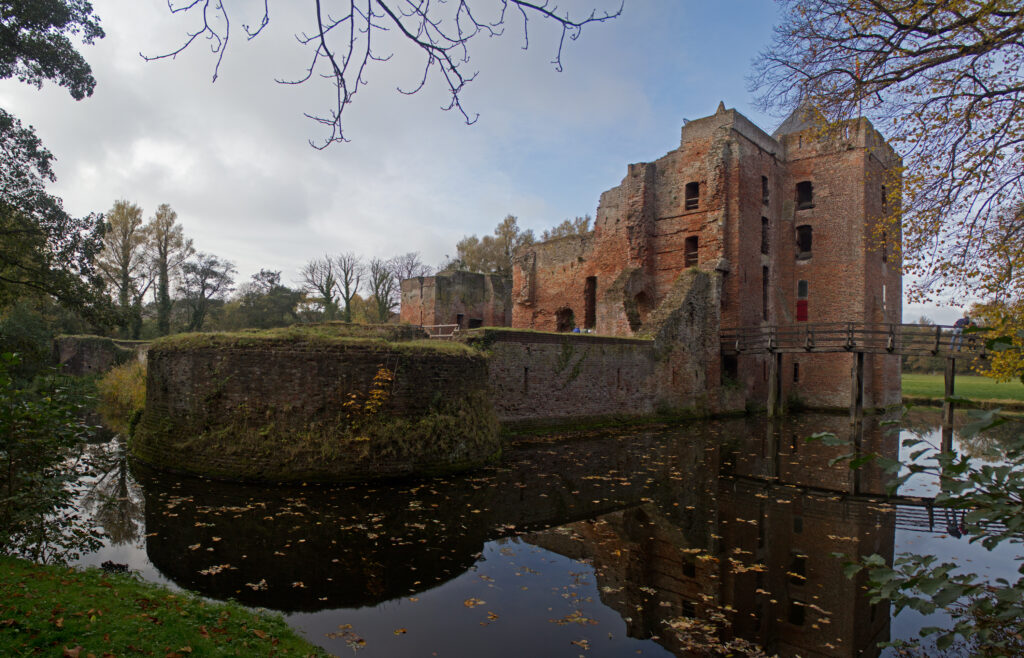
Located in downtown Haarlem, you’ll need to take a short cycle, bus ride, or drive to visit the incredible Brederode Castle. 🚲
Live out your princess dreams at Brederode Castle in Haarlem. Image: Johan Bakker/Wikimedia Commons/CC4.0
However, we promise it’s worth it: the castle boasts an amazing moat and drawbridge, so you can really live your fairytale dreams while you wander the grounds and imagine what life might have been like nearly 900 years ago.
There are also guided tours with actors who bring the history of the castle to life to really bring you back in time. 👸
💰 Price: €6 for adults, €4.50 for children ⏰ Opening hours: Wednesday, Friday, Saturday and Sunday, 11 AM to 5 PM 📍 Location: Velserenderlaan 2, 2082 LA Santpoort-Zuid
17. Catch a fabulous harmony at Haarlem’s Philharmonie
The Philharmonieis the place to be in Haarlem if you’re an orchestra fan. Bach, Beethoven, Mozart, Tchaikovsky; you name it, you can find it! 🎼
Catch a charming orchestra at the Philharmonie in Haarlem! Image: Depositphotos
A wondrous 19th-century venue, this theatre has five different halls. That’s more than enough space for a range of performances!
If you’re lucky, you might just catch the Dutch Philharmonic Orchestra or the Dutch Chamber Orchestra pumping out some sweet tunes.
18. Take a cycle out to Bloemendaal Aan Zee beach in Haarlem
If you’re looking for a break from the cityscapes (though we’re not sure why, when Haarlem is so stunning!), we can only suggest Bloemendaal Aan Zee Beach.
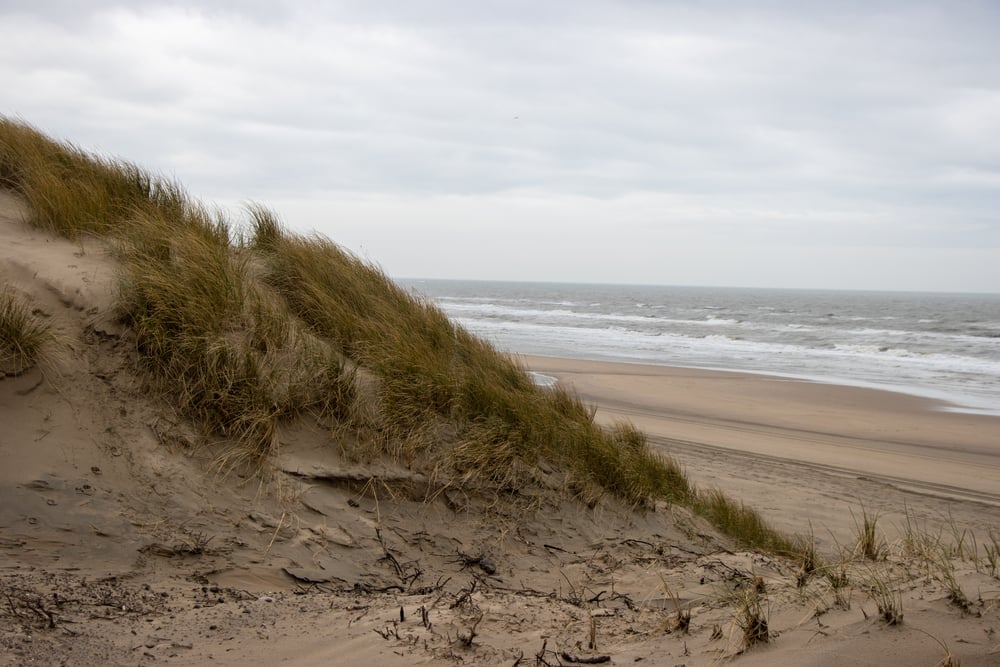
Relax and get your tan on at the Dutch beach. Image: Depositphotos
About a 25-minute cycle from the centre of Haarlem, here you can live out your sea-faring dreams. Beautiful in the Dutch summer heat, this beach is also perfect for returning to nature in winter and experiencing the Dutch art of uitwaaien.
While there, why don’t you reminisce on the flatness of the Netherlands and the lack of cliffsides? 🤔
19. Check out the architectural wonder that is the Cathedral of St. Bavo
Oh, so you’re a bit of an architecture nerd like us, huh? Well, there’s something for you to do in Haarlem too.
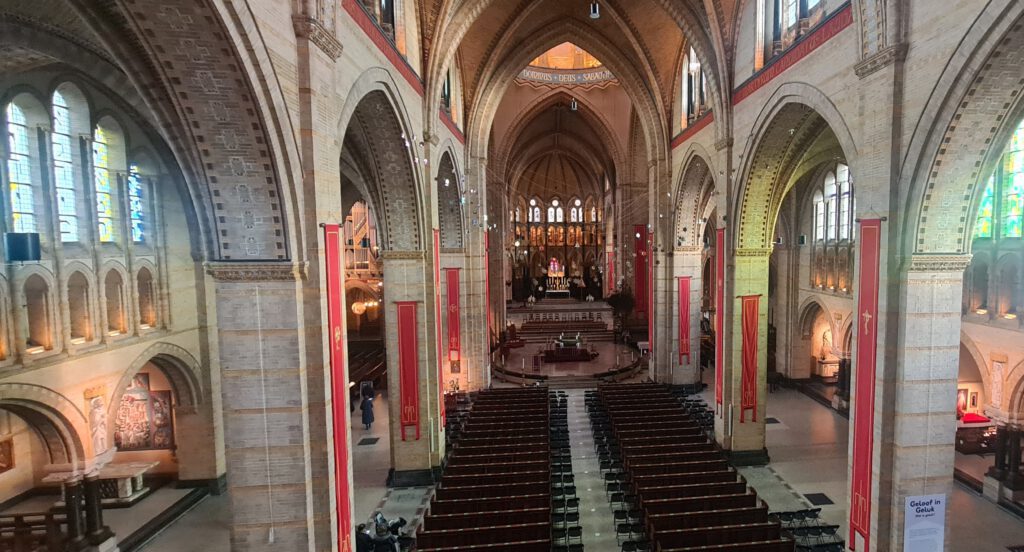
The Cathedral of St. Bavo, also known as the Koepel Kathedraal, in Haarlem has much to offer. Built in 1853, this church offers neo-romanesque style architecture, with influences from Byzantine and Art Nouveau styles.
Take a trip to the Cathedral of St. Bavo for a visit to Gothic churches of the past. Image: Simone Jacobs/DutchReview
Not only is the massive cathedral a wonder to look at, but it also has a rich history. The cathedral was built as a replacement for St. Bavokerk when the church was converted to Protestantism.
This Roman Catholic church now hosts choir recitals and an organ that could only be a musician’s dream. 🎹
💰 Price: €7.50 for adults, €4 for kids ⏰ Opening hours: Wednesday to Sunday, 1 PM to 5 PM 📍 Location: Leidsevaart 146, 2014 HE Haarlem
There are so many things to do in Haarlem, from museums to castles to parks. Little Amsterdam has something for nearly everyone, so give the city a chance and explore for a day or two!
Will you be visiting Haarlem? If so, where will you be headed first? Tell us in a comment below!
It may not feel like it today (or tomorrow), but summer is coming — pinky promise. 🌞
Let’s see what the weather will be like, because Ascension Day plans shouldn’t be left to Dutch weather roulette. 👇
Today: clouds, wind, and a few dramatic showers
This morning is classic Dutch gloom. Buienradar reports grey skies and showers, with temperatures hovering around 13 to 14 degrees Celsius — not freezing, but definitely jacket weather. 🥶
The wind gets dramatic early on, gusting from the southwest at sea (force six, because why not), before calming slightly as it shifts northwest.
By afternoon, rain sticks to the south, and if you’re in the southeast, a thunderstorm might crash the party like it owns the place.⚡
Elsewhere, things brighten up. The sun peeks out, especially along the coast, with highs reaching 14 to 17 degrees thanks to a fresh breeze.
Tonight stays dry and calm. It cools to 3 degrees in the northeast (rude), while the south chills around 12 degrees. Winds shift to the south, which finally hints at better things ahead.
Mixed feelings for Ascension Day
Thursday starts decently if you’re in the east, where the sun will stay a little longer. But clouds move in quickly from the west, bringing light rain.
Most rain will fall in the north, but it’s more of a damp annoyance than a proper storm — just enough to mess with your hair, not your plans.💁♀️
Winds stay friendly in the morning, but pick up later near the coast. It’s a true Dutch spring day: sun one minute, soaked the next. You know the drill. 🙃
Sunshine returns for the weekend
Friday is when things start turning around. The skies are clear, the wind finally chills out, and temperatures rise to a balmy 20 degrees Celsius. 🌞
Then comes Saturday, and it brings the real heat. Some places will hit 25 degrees, and suddenly everyone’s dressed like it’s mid-July.
Might be time to risk a picnic before the weather remembers it’s Dutch. Image: Depositphotos
Sunday cools slightly to around 20 or 21 degrees. There’s a chance of a local thunderstorm inland, but nothing worth cancelling your park plans over. 👌
So, what are you doing this Ascension Day? Will you be braving the drizzle or saving your energy for the sunshine on Saturday? Drop your plans below. 😎